Digital Mockups

Virtual 3D Stadiums

Rotate architectural models, toggle lighting conditions, and study shadow formations across our four pre-rendered digital fields.

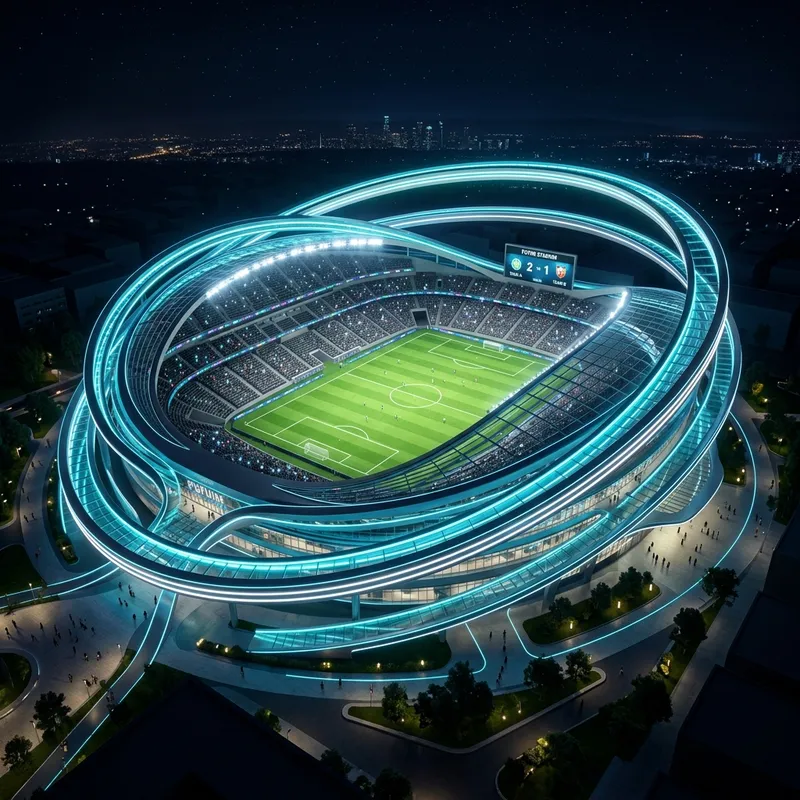
Virtual football stadium mock-up featuring illuminated cyan structural rings

Featured Model: Neo-Futura Arena (CampioniPlay 3D Concept)

WebGL Web Rendering & Mesh Optimizations

Displaying detailed stadium seating plans, structural cables, and roof rings in a web browser requires careful resource handling. The software engineers at CampioniPlay Ltd have built a customized scene-graph manager that partitions the 3D files (grands, support rings, roof arches, light towers) and streams them dynamically according to the camera's view frustum. This prevents unnecessary memory overhead and guarantees smooth performance across desktop systems and mobile devices.

Each mockup incorporates real-time shadow projection shaders. Users can select the virtual time of day to analyze the impact of sun angles on the pitch, or switch on the LED floodlight rigs for night simulation tests. The pitch model also incorporates physical grass friction models, showing how different weather settings influence ball speed.

Neo-Futura Arena

Located in a digital metropolis. Featuring 360-degree floating screens, solar roofs, and an estimated capacity of 95,000 virtual spectators.

The Neo-Futura Arena represents our flagship design. Its external architecture uses parametric patterns with translucent meshes that adapt to weather conditions.

The seating layout is divided into three tiers to isolate acoustic echoes. Sound-field simulations show that spectator cheers are concentrated onto the pitch, creating an intense digital atmosphere.

Capacity: 95,000 seats
Friction Engine: Smart Grass Sensors

Larnaca Beach Temple

Inspired by the Cyprus shoreline. Built with a shell-like roof structure that optimizes coastal breeze flow and ocean reflections.

Positioned near the Larnaca coast, this stadium is a tribute to CampioniPlay Ltd's headquarters in Cyprus. The white limestone shaders mimic local rocks.

The VIP boxes include integrated digital tactics screens, letting users monitor team shapes and player passing metrics directly from their seats.

Capacity: 62,000 seats
Friction Engine: Kinetic Solar Roof Panels

King Octo Stadium

Our largest database model, boasting 8 floating support towers that project starting lineups into the virtual clouds.

With 110,000 virtual seats, King Octo Stadium is built for grand tournaments. Its crown-like structure serves as an anchor for holographic repeaters.

Performance benchmarks show this model is highly optimized for multi-spectator streaming sessions and eSports match tracking.

Capacity: 110,000 seats
Friction Engine: Holographic Overlay Columns

Stadio Olympus

Built into the side of a mountain peak. Simulates high-altitude winds to test ball drag and long passing accuracy.

Olympus provides a weather simulation challenge. High-altitude atmospheric settings affect ball drag coefficients and goalkeeper kick trajectories.

Advanced users use this stadium to test defensive lines under simulated cross-winds of up to 40 km/h and rain patterns.

Capacity: 45,000 seats
Friction Engine: High-Altitude Wind Dynamics
Render Support

Stadium Simulation FAQ

Our virtual stadium models are loaded and rendered using WebGL 2.0. The textures are compressed in high-performance WebP formats to minimize data transfer rates and maximize rendering frames.

Yes. Through the viewport mesh culling techniques engineered by CampioniPlay Ltd, only the visible polygons are processed. This enables stable 60FPS simulations on modern mobile web browsers.